01
Walk the site
The surface, the drainage, and what the pour has to survive — scoped on site with Kenny.
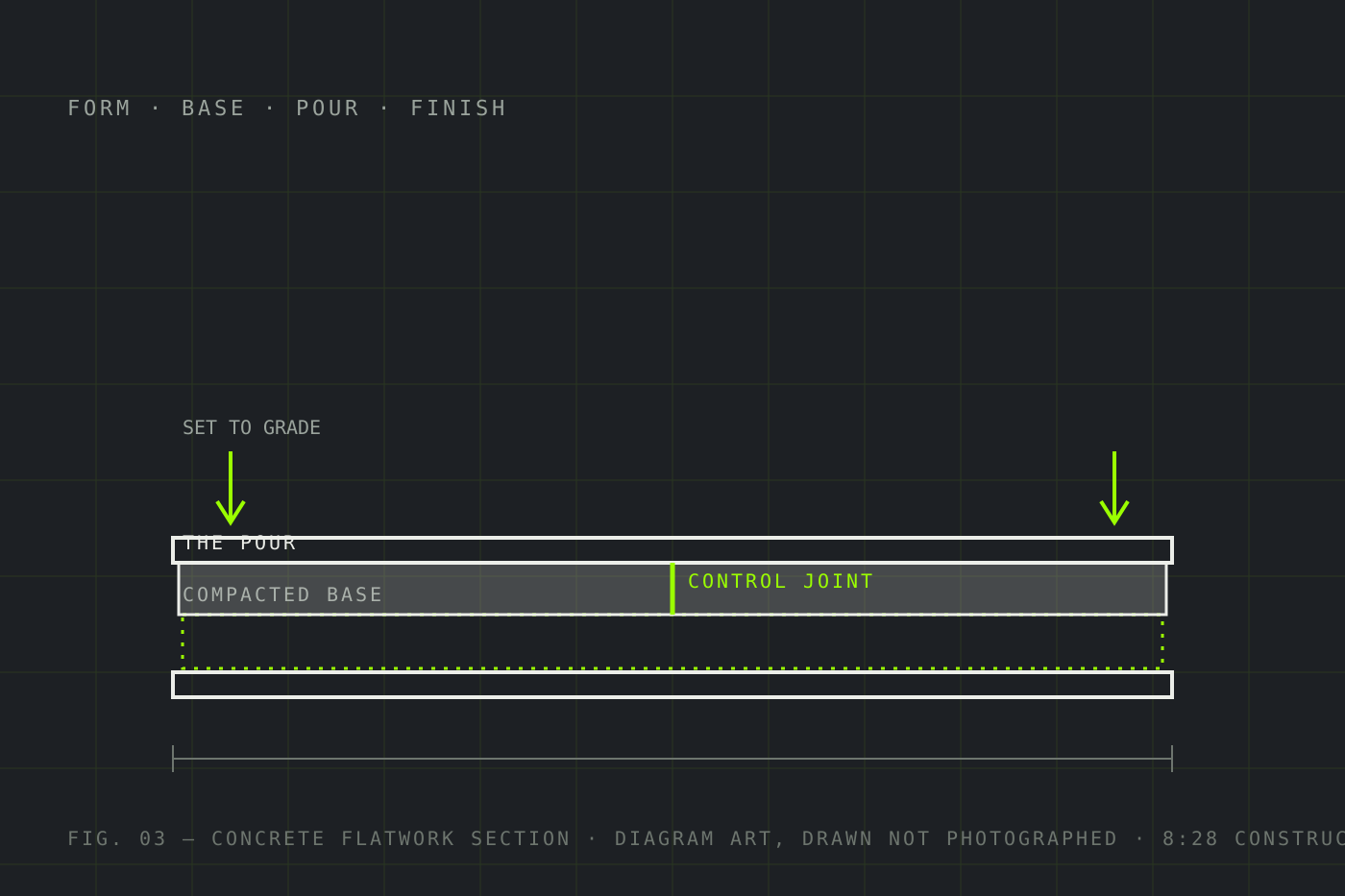
Concrete flatwork and re-pours across Chester County — formed, based, poured, and finished to the same standard as everything else that carries the 8:28 name.
The honest problem
A pour is decided before it starts: the base, the forms, the reinforcement, and the drainage around it. Shortcuts there become cracks and puddles that no finish can hide.
828 treats concrete like the rest of the craft — scoped plainly, formed carefully, and finished clean, including the re-pours that finish a lateral or excavation job properly.
Concrete work we take on
How the work runs
The surface, the drainage, and what the pour has to survive — scoped on site with Kenny.
Excavation to depth, compacted base, forms set to line and grade. This is the part that decides the finish.
Concrete placed, screeded, and finished; control joints cut where the slab needs them.
The pour cures on its schedule, forms come off, and the surrounding grade and surface are restored.
From the manifest
Objections, answered
Yes — when a lateral or excavation job cuts through a driveway, walk, or patio, re-pouring the cut sections is part of finishing the job, and on lateral work restoration is always included.
Light foot traffic is usually fine after a day or two; vehicles and full loads wait longer, and full cure takes about four weeks. We'll give you the exact guidance for your pour before we leave.
Concrete is only as stable as what's under it. A compacted, well-graded base is what keeps a slab from settling and cracking — it's the step we never rush.
Often, yes — grading and drainage corrections around existing concrete are part of the excavation side of the business. Kenny will tell you on the walkthrough whether a correction or a re-pour is the honest fix.
Proof
“Kenny arrived on time, talked me through my options, handled a last-minute drainage addition without a hitch, and the work is exactly what I asked for.”
Every review on this page is a published Google review, word for word. Every photo is labelled — real 828 work or reference imagery. Nothing in between.
Start with a consult
The consult is a free 90-minute in-home walkthrough — scope, constraints, and honest next steps.
“Kenny arrived on time, talked me through my options, handled a last-minute drainage addition without a hitch, and the work is exactly what I asked for.”